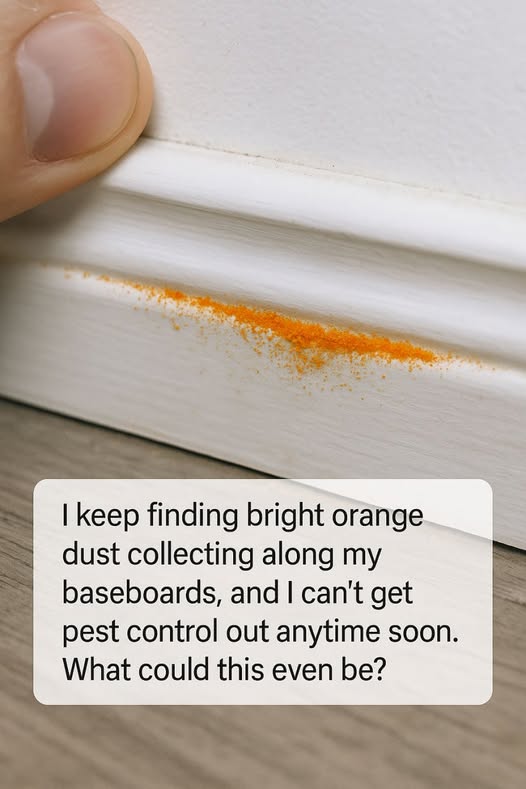
Discovering bright orange dust collecting along your baseboards can be both puzzling and unsettling. This unusual residue may leave you wondering where it’s coming from and whether it signals a serious issue in your home. While waiting for pest control or a professional inspection, it’s helpful to understand the possible causes and take reasonable steps to manage the problem.
In this article, we’ll explore common explanations for orange dust—from pest activity to material breakdown—and discuss what you can do in the meantime.
1. Could It Be Sawdust From Hidden Wood Damage?
One of the most common explanations for orange dust is sawdust produced by hidden wood damage. If your home contains wooden floors, walls, or furniture, the dust may be the result of deterioration or insect activity. Wood-boring insects such as termites or carpenter ants produce frass—a mix of wood particles and insect waste—that can appear orange or rust-colored.
Check wooden surfaces for small holes, weakened spots, or hollow sounds. Any of these signs warrant prompt attention to prevent further structural damage.
2. Termite Frass vs. Ordinary Dust: How to Tell the Difference
Termite frass is often mistaken for ordinary household dust. Unlike typical dust, frass is uniform in size and shape and may resemble tiny pellets or grains, usually around 1 millimeter wide.
Another clue is location: frass often appears in small piles beneath infested areas. If you notice consistent accumulation in the same spot, a termite inspection is strongly recommended.
3. Carpenter Ants and Other Insects That Leave Orange Debris
Carpenter ants hollow out wood to create nests, pushing sawdust-like debris out of their galleries. While this debris is often light in color, it can appear orange when mixed with dirt or moisture.
Signs of carpenter ants include small holes in wood, faint rustling sounds in walls, or ant sightings indoors. Reducing moisture and sealing entry points may help temporarily until professionals assess the situation.
4. Rusting Fasteners: When Metal Turns Into Orange Powder
Rusting nails, screws, or brackets can also produce orange dust, particularly in humid environments. As metal oxidizes, rust flakes may fall and collect along baseboards.
Inspect areas where metal fasteners are used, such as trim, door frames, or window sills. Treating or replacing corroded hardware can prevent further deterioration.
5. Wood Friction Dust From Doors, Floors, and Furniture
Friction between wooden surfaces—such as doors rubbing against frames or furniture scraping floors—can generate fine dust. Over time, this wear can result in noticeable debris along baseboards.
Look for contact points where wood surfaces rub together. Applying wax, felt pads, or minor adjustments can reduce friction and slow dust production.
6. Paint, Stain, or Drywall Pigments Breaking Down
Paint, stain, or drywall compounds can degrade due to humidity, temperature changes, or age. As these materials break down, they may shed fine, colored particles.
Check for peeling paint, cracks, or chalky residue on walls and trim. Repainting or sealing affected areas can help prevent ongoing dust formation.
7. Brick, Tile, and Concrete Materials Shedding Particles
see continuation on next page
