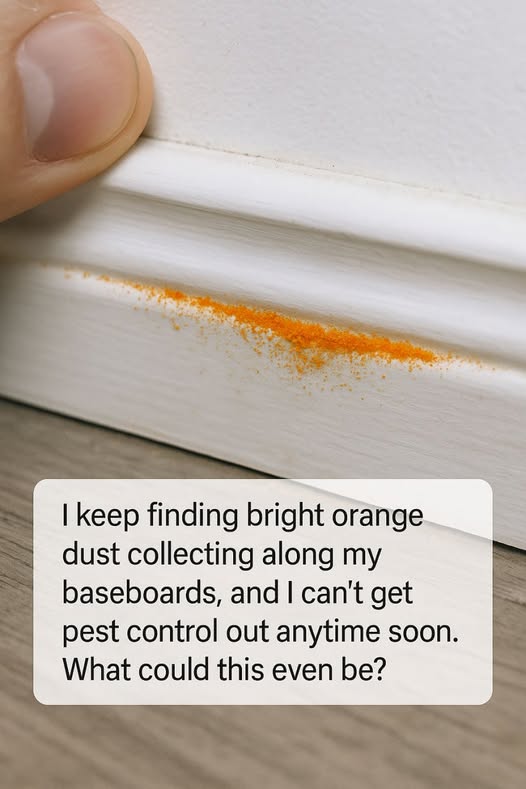
7. Brick, Tile, and Concrete Materials Shedding Particles
Brick, tile, grout, and concrete can shed particles when they erode or crack. If these materials are located near baseboards, their residue may appear as orange dust.
Inspect for crumbling grout, chipped tiles, or deteriorating masonry. Sealing or repairing damaged areas can help reduce debris and protect the structure.
8. Outdoor Soil, Pollen, and Road Dust Entering Indoors
Outdoor debris—including soil, pollen, and road dust—can make its way inside through doors, windows, or poorly sealed gaps. These particles often settle along baseboards.
Ensure doors and windows are properly sealed, use doormats, and clean high-traffic areas regularly. Air purifiers can also help capture airborne particles.
9. Mold, Mildew, and Rust-Colored Fungal Spores
Certain molds and fungi produce rust-colored spores that resemble orange dust. These organisms thrive in damp or poorly ventilated environments.
Inspect moisture-prone areas such as basements, bathrooms, and kitchens. Address leaks, improve airflow, and use dehumidifiers as needed. Professional remediation may be necessary if mold is present.
10. Household Items That Break Down Into Orange Particles
Some pet toys, fabrics, décor, or household items may degrade over time, shedding colored particles—especially if made from low-quality materials.
Check nearby items for wear or crumbling and replace them if necessary. Choosing durable materials can help prevent repeat issues.
11. Cleaning Hacks That May Be Making the Problem Worse
Certain viral cleaning hacks or harsh products can leave residues that attract dust or accelerate material breakdown.
Review your cleaning products and methods. Non-abrasive cleaners and gentle techniques are generally best for preserving finishes and reducing debris.
12. Safe DIY Tests to Try Before Pest Control Arrives
Before professionals arrive, you can perform simple tests to gather clues. Place white paper beneath the affected area and monitor dust accumulation over several days.
You can also gently tap or scrape nearby surfaces to see if particles fall and observe their texture and consistency. These observations may help narrow down the cause and inform next steps.
