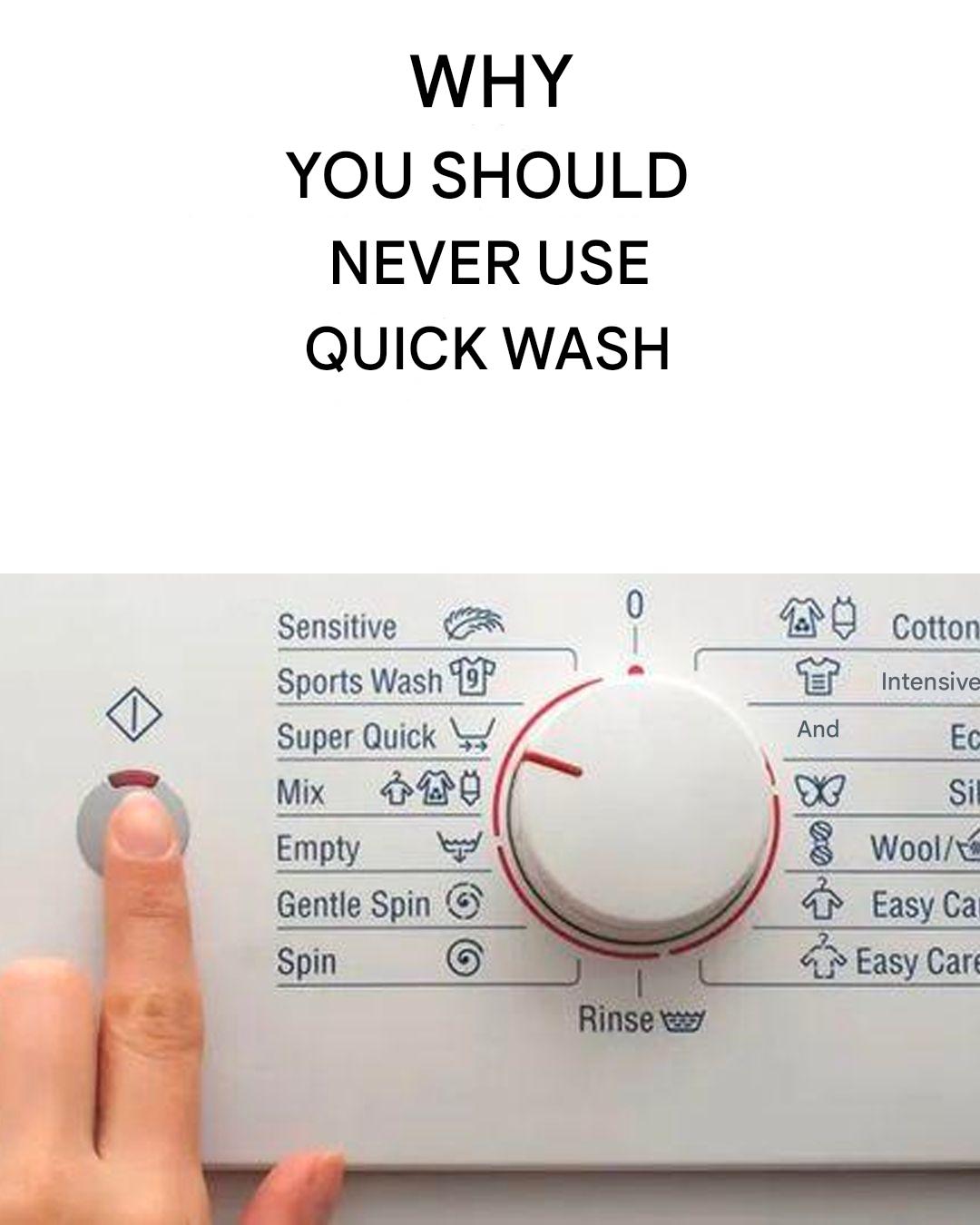
1. It Doesn’t Clean Deeply
The short duration means detergent doesn’t have enough time to penetrate fabric fibers. Stubborn stains like sweat, grease, and food residues are often left behind, meaning you’ll need to rewash items anyway.
2. It Can Use More Water and Detergent
Contrary to what many believe, quick cycles often compensate for less time by using more water and detergent. This cancels out the supposed savings on energy and resources, and in the long run, may even increase your utility bills.
3. Tough on Fabrics
Because the machine has to “work harder” in a shorter period, the spin speed and agitation are more intense. This can cause delicate fabrics to shrink, fade, or wear out faster, shortening the life of your clothes.
4. Poor for Heavy Loads
Bulky items such as towels, bedsheets, or heavily soiled clothes need longer soaking and mechanical action. Quick wash cycles simply can’t provide that, leaving large items only partially clean.
5. Promotes Residue and Odors in the Machine
Incomplete rinsing means detergent residue, bacteria, and soap scum can build up inside the drum. Over time, this leads to unpleasant odors, mold growth, and extra maintenance.
When Is Quick Wash Acceptable?
Quick wash isn’t always a villain — but it should be used sparingly and strategically:
Lightly worn clothes (only a few hours).
T-shirts, underwear, or sportswear that isn’t heavily soiled.
Refreshing clothes before immediate use.
✅ Bottom line: The quick wash cycle is a handy shortcut, but it’s no replacement for a full wash. For freshness, hygiene, and fabric care, choose a longer cycle suited to the load — your clothes (and your washing machine) will thank you.
