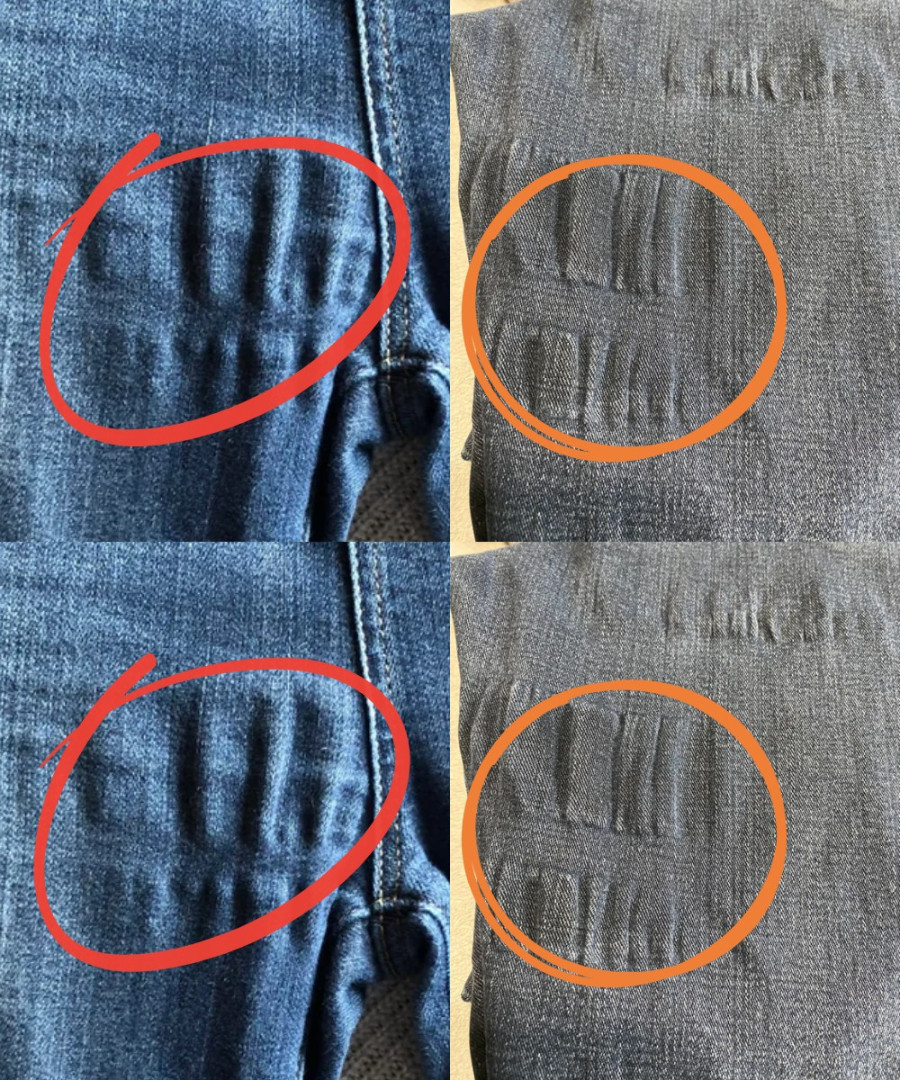
1. Stretch Fibers + Heat = Trouble
Most modern jeans aren’t pure cotton anymore. They usually contain elastane/Lycra/spandex (often 1–3%) to make them comfy.
The problem?
👉 Elastane is heat-sensitive.
Hot water or a hot dryer weakens those elastic fibers
Once damaged, they don’t snap back evenly
The surrounding cotton shifts and twists around them
That uneven recovery is what causes random ripples, puckering, or wavy seams, especially behind the knees, thighs, and waistband.
Unlike cotton shrinkage, this distortion is irregular, which is why it looks so strange.
2. The Washer Physically Stresses the Fabric
During washing, jeans are:
Twisted
Stretched
Compressed
Slammed against other clothes
High spin cycles and heavy loads exaggerate this. When parts of the fabric stretch more than others—and then dry unevenly—you get permanent-looking waves.
This is especially noticeable in:
Skinny jeans
Stretch denim
Lightweight or fast-fashion jeans
3. Overwashing Breaks Down the Fibers
Jeans don’t need frequent washing, but most of us wash them anyway.
Each wash:
Weakens elastane
Breaks down cotton fibers
Increases fabric fatigue
Over time, the fabric simply loses structural integrity, and rippling becomes unavoidable.
4. Dryers Make Everything Worse
Even if you wash in cold water, the dryer can undo everything.
High heat:
Destroys elastane elasticity
“Sets” distortions into the fabric
Makes ripples permanent instead of temporary
That’s why jeans often look worse after drying than right out of the washer.
5. Uneven Shrinkage
Cotton shrinks differently depending on:
Weave direction
Fabric thickness
Tension during manufacturing
When blended with stretch fibers, that uneven shrinkage shows up as waves instead of normal wrinkles.
Can You Prevent It?
Yes—mostly.
Best practices for smooth jeans:
Wash cold only
Turn jeans inside out
Use gentle or delicate cycle
Skip the dryer (or use low heat for 10–15 minutes max)
Lay flat or hang to air-dry
Wash only when truly dirty (not after every wear)
Once elastane is heat-damaged, it can’t be repaired—but you can slow the process dramatically.
Why Older Jeans Didn’t Do This
Vintage or 100% cotton jeans wrinkle—but they don’t ripple like modern ones. That’s because they:
Had no stretch fibers
Shrunk evenly
Could tolerate heat better
Comfort came at the cost of durability.
Bottom line
Those ripples are a sign of elastane fatigue, usually caused by heat + mechanical stress + overwashing. Your jeans aren’t ruined overnight—but the more heat they see, the faster that weird wavy look becomes permanent.
If you want, I can also tell you:
Whether ironing or steaming helps (sometimes!)
How to tell if a pair is beyond saving
Which denim blends last the longest
Just say the word 👖
