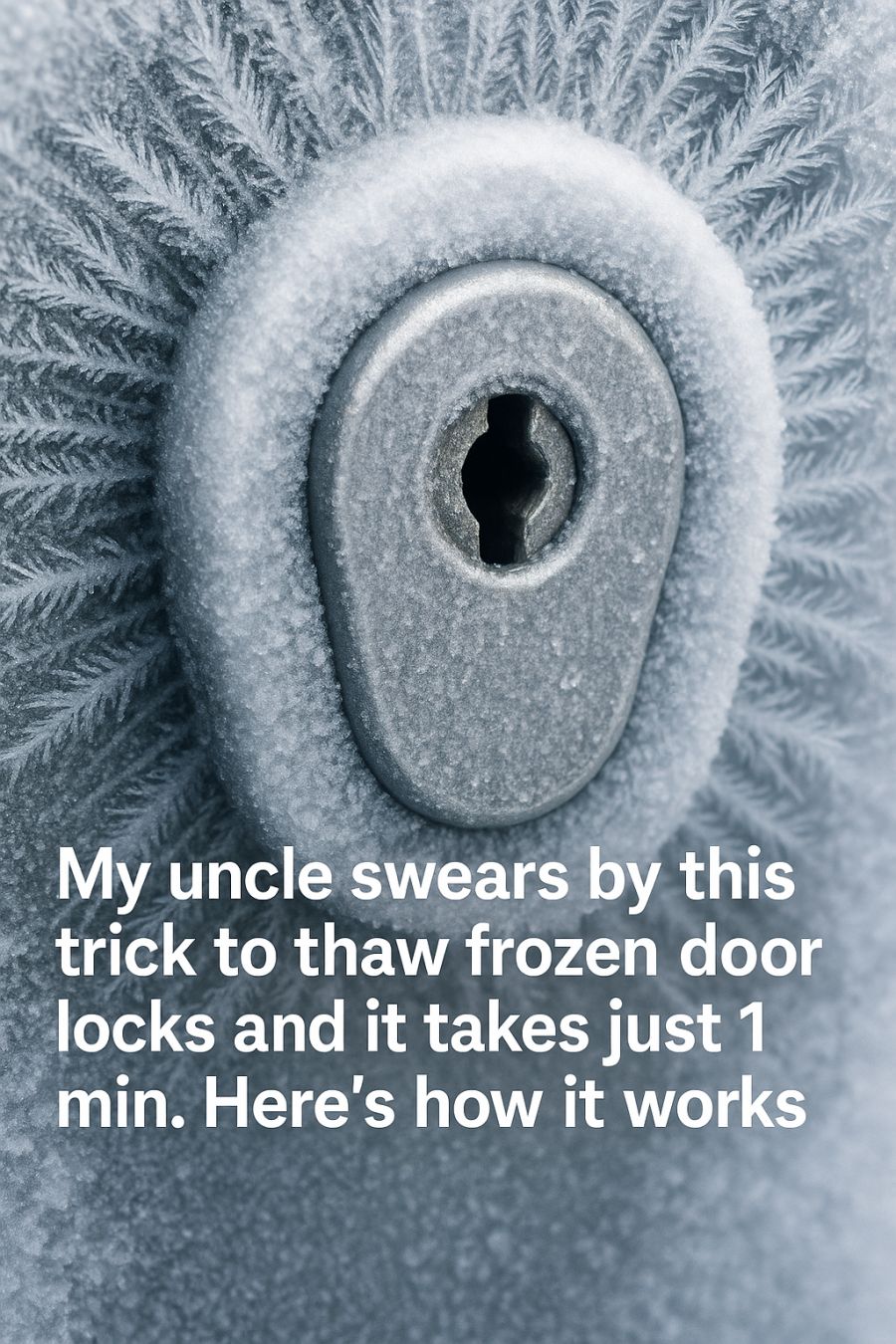
Step 3: Apply Heat Directly to the Lock
Hold the hairdryer about six inches away from the lock and aim it at the keyhole. Move it slightly back and forth to distribute heat evenly. Continue for 30 seconds to one minute, until the lock feels warm and any visible ice melts.
Step 4: Try Turning the Key at the Right Moment
Once the lock is warm, gently try turning the key. Do not force it. If it still resists, apply heat for another 30 seconds and try again. Once the ice melts, the key should turn smoothly.
Why This Method Works So Quickly
The direct heat from the hairdryer rapidly melts ice inside the lock. Unlike other methods that introduce moisture or risk damage, this approach targets the problem efficiently and safely.
Common Mistakes That Can Damage Locks
Using hot water: This may work briefly but adds moisture that can refreeze later.
Forcing the key: This can bend or break the key or damage the lock.
Using open flames: Lighters or matches can harm internal components and create safety hazards.
When to Avoid Viral Hacks
Many viral solutions—like pouring hot water, using lighters, or relying solely on de-icer sprays—can cause long-term issues. While de-icer sprays can help, they’re not always available and can add up in cost over time.
A Backup Plan If the Trick Doesn’t Work
If a hairdryer isn’t effective, a lock de-icer spray is a good backup. For car owners, keeping a small battery-powered or portable hairdryer in your vehicle can be helpful when you’re away from home.
How to Prevent Locks From Freezing
Apply graphite powder or a lock-specific lubricant before winter.
Use protective covers to shield locks from snow and ice.
Keep moisture out whenever possible.
When a Frozen Lock Signals a Bigger Problem
If your locks freeze frequently, it could indicate moisture intrusion or insulation issues. In these cases, a professional locksmith can help identify and fix the root cause. If a frozen lock leaves you stranded in an unsafe situation, it becomes a security concern—so having a backup plan is essential.
