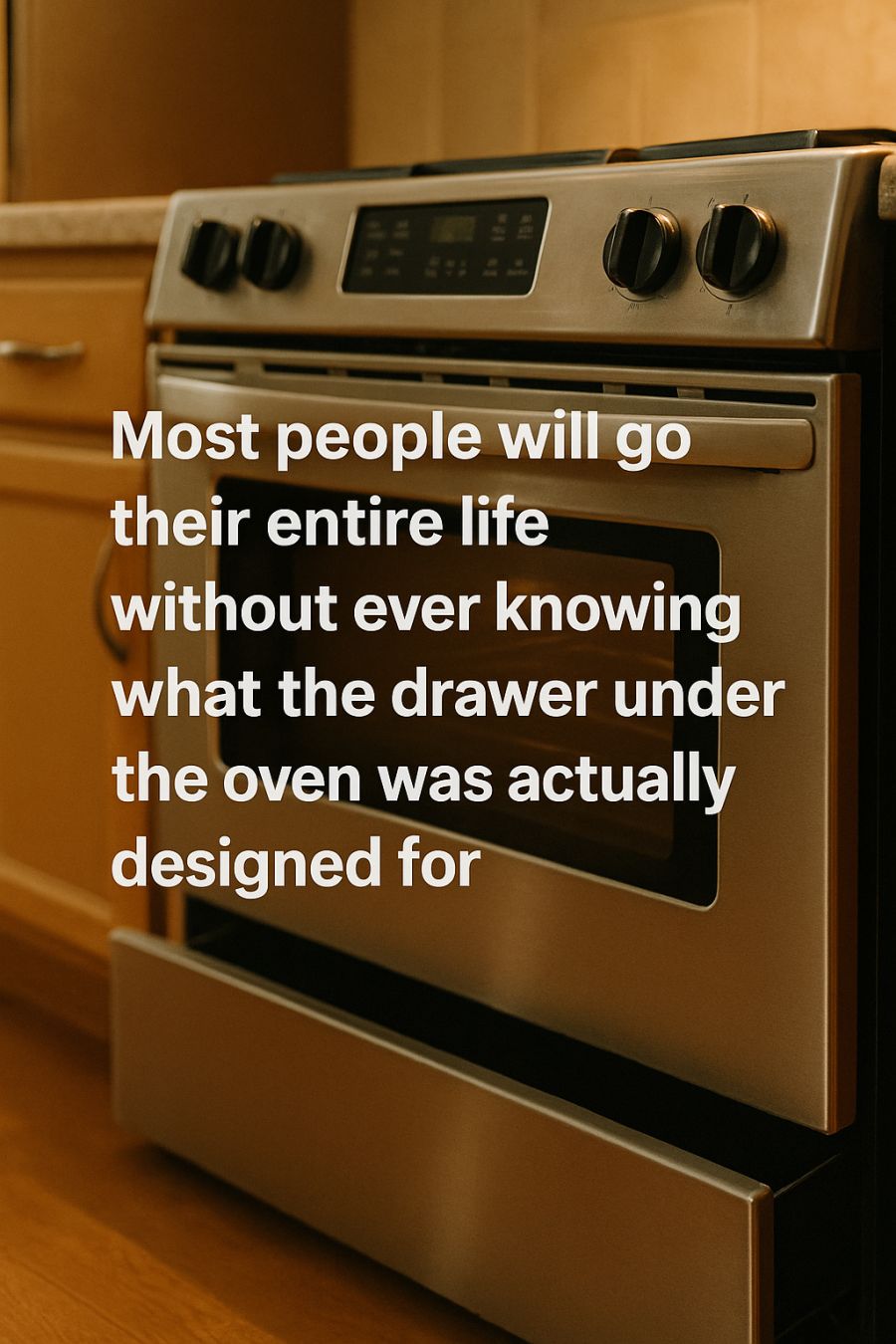
The kitchen is often called the heart of the home—a place where meals are prepared, conversations unfold, and memories are made. Yet despite how much time we spend there, some kitchen features remain surprisingly misunderstood. One of the most overlooked is the drawer beneath the oven. Many people go their entire lives without knowing what it was actually designed for.
While it’s commonly used to store pots, pans, and baking sheets, that drawer may have a very different purpose. Understanding what it was intended to do can change how you use your kitchen and even help you avoid potential safety issues.
The Mystery of the Oven Drawer Most People Never Question
For many households, the drawer under the oven is simply extra storage. Its convenient placement makes it an easy spot to stash bulky cookware. Because of this, few people ever stop to wonder why it exists at all.
However, this feature wasn’t added arbitrarily. In many ovens, the drawer was designed with a specific function in mind—one that often goes unnoticed. Knowing its original purpose can help you use your appliance more effectively and safely.
How a Design Feature Became a Catch-All Storage Space
Over time, the oven drawer gradually evolved into a general storage area. Homeowners naturally repurposed it for items that didn’t fit elsewhere, especially flat cookware like baking sheets and roasting pans.
With dimensions typically around five inches high and deep enough for large pans, the drawer seemed perfectly suited for storage. As a result, its original function faded from common knowledge, leaving many people unaware of what it was meant to do.
What Manufacturers Actually Intended the Drawer to Be
In many oven models, the drawer is actually a warming drawer. Its purpose is to keep cooked food warm until it’s ready to be served. Rather than reheating food or continuing to cook it, the warming drawer maintains a low, steady temperature.
Most warming drawers operate between 140°F and 200°F. This range helps preserve flavor and texture without drying food out. The feature is especially useful during holidays or large meals, when coordinating multiple dishes can be challenging.
Warming Drawer vs. Storage Drawer: Knowing the Difference
Not every oven drawer is a warming drawer. Some are designed strictly for storage. The key difference is whether the drawer contains a heat source.
A warming drawer usually has temperature controls, such as a dial or digital setting. A storage drawer does not heat up and will not have any controls. Checking your oven’s manual is the best way to be sure.
How to Check Your Oven Manual (and What the Symbols Mean)
Your oven’s user manual will clearly explain the function of the drawer. If you no longer have a paper copy, most manufacturers offer manuals online.
Look for labels, symbols, or temperature controls on the drawer itself. These are strong indicators that it’s a warming drawer and not intended for storage.
Why Using the Drawer for Pan Storage Can Be a Fire Hazard
If your drawer is a warming drawer, storing cookware inside it can be dangerous. When the drawer heats up, items inside may become extremely hot or even pose a fire risk if they aren’t heat-safe.
Stored items can also block airflow, which may cause overheating or damage to the appliance. Keeping the drawer clear allows it to function properly and reduces safety risks.
The Science of Keeping Food Warm Without Overcooking It
Warming drawers work by maintaining a consistent, low temperature that slows heat loss without continuing the cooking process. This gentle heat prevents food from drying out, toughening, or losing flavor, making it ideal for holding dishes until they’re ready to be served.
