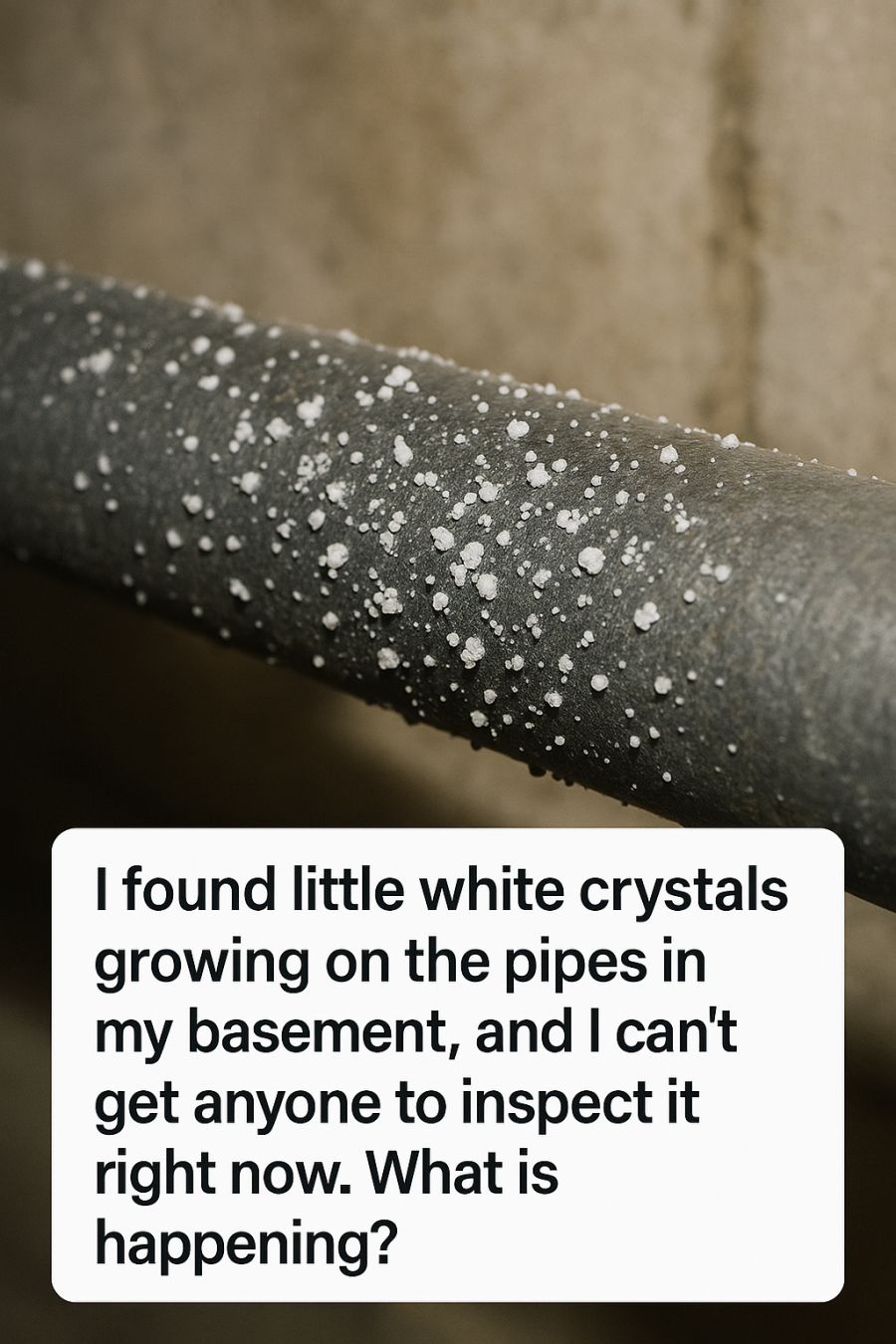
Discovering little white crystals on the pipes in your basement can be a perplexing and concerning experience—especially if you’re unable to get a professional inspection right away. These crystalline formations can indicate underlying issues that may require attention. Understanding what these crystals are, why they form, and how to handle them can help you protect your home’s structural integrity and prevent further complications.
In this article, we’ll explore the potential causes behind these mysterious white crystals, commonly known as efflorescence. We’ll explain the science behind their formation, how to distinguish them from other possible hazards, and what practical steps you can take while waiting for professional assistance.
1. What Those Little White Crystals on Your Pipes Probably Are
The white crystals you’re seeing are most likely efflorescence. This occurs when water moves through porous materials such as concrete, brick, or mortar, dissolving salts and minerals within them. As the water evaporates at the surface, it leaves behind a powdery white residue, usually made up of calcium carbonate, sodium sulfate, or potassium nitrate.
Efflorescence is common in damp environments like basements. While it isn’t harmful by itself, it often signals moisture intrusion, which can lead to structural issues if left unaddressed. The crystals may appear as fine dust or more noticeable crystalline growths and are especially common in older homes with limited moisture barriers.
2. Why Efflorescence Forms on Basement Pipes and Walls
Efflorescence forms when water-soluble salts in building materials combine with moisture. Pipes—especially metal ones—are frequently exposed to condensation, making them ideal surfaces for salts to crystallize as moisture evaporates.
Basements are particularly vulnerable because they are below ground level and exposed to higher humidity, groundwater pressure, and seasonal moisture changes. Poor drainage, insufficient waterproofing, or heavy rainfall can all contribute to the problem.
3. How to Tell Efflorescence From Mold, Asbestos, or Other Hazards
Efflorescence is often mistaken for mold, but there are key differences. Efflorescence is dry, chalky, and dissolves in water. Mold typically looks fuzzy or slimy and may be black, green, blue, or gray.
Asbestos is a fibrous material found in some older insulation and construction products. It does not dissolve in water and can be hazardous if disturbed. If you suspect asbestos, do not touch it—contact a professional immediately.
A simple test: wipe the material with a damp cloth. If it dissolves, it’s likely efflorescence.
4. Common Plumbing and Moisture Problems Behind the Crystals
Efflorescence usually points to ongoing moisture issues. Leaking pipes, poor drainage, damaged vapor barriers, or groundwater seepage can all allow water to carry salts to the surface.
Even small plumbing leaks or persistent condensation caused by temperature differences can create the conditions needed for efflorescence to develop.
5. When White Crystals Signal a Serious Leak or Structural Issue
Although efflorescence itself is harmless, it can be a warning sign of bigger problems. Persistent moisture can lead to mold growth, corrosion, or weakening of structural materials.
Red flags include rapidly spreading crystals, damp walls or floors, pooling water, or visible foundation cracks. These issues should be addressed promptly to prevent long-term damage.
6. DIY Tests You Can Safely Do While You Wait for an Inspection
While waiting for professional help, you can perform a few simple checks:
Tape test: Press clear tape onto the crystals. If they stick and look powdery, it’s likely efflorescence.
Water test: Lightly spray the area with water. If the crystals dissolve, that’s another sign.
Foil test: Tape aluminum foil to the wall or floor. If moisture appears underneath after 24 hours, moisture is coming from within the structure.
7. Viral Cleaning Hacks for Efflorescence: What Actually Works
see continuation on next page
