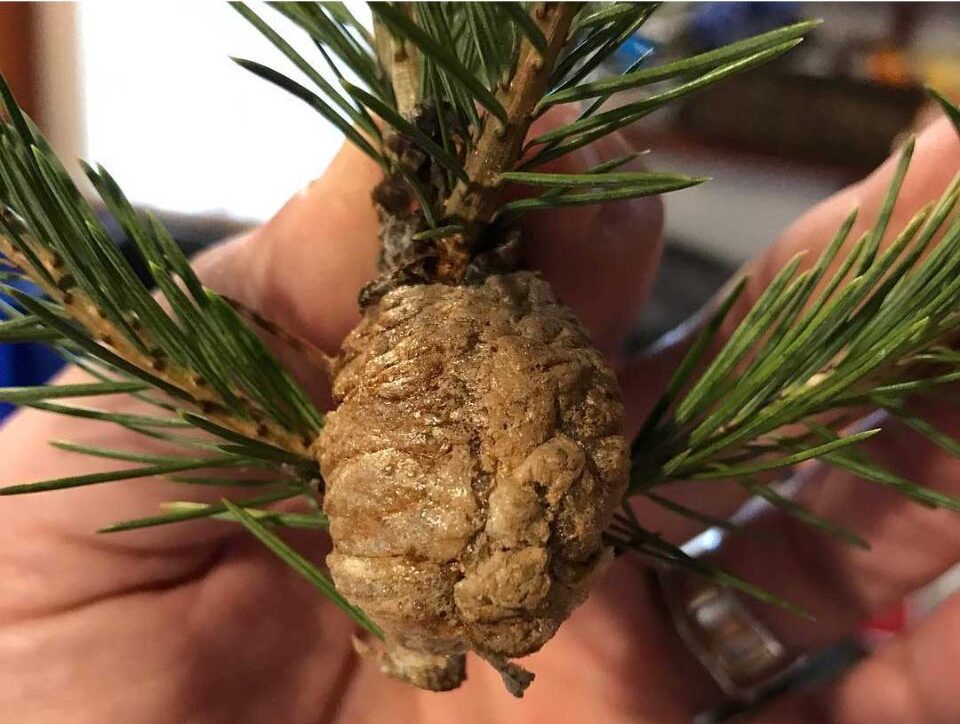
The Unexpected Holiday Encounter: Praying Mantis Eggs on Christmas Trees
As the holiday season approaches, families around the world embrace the tradition of decorating their homes with festive ornaments and a Christmas tree. But for one man, this familiar ritual took an unexpected turn when he discovered something unusual hidden among the branches—praying mantis eggs.
His surprising find led him to post a warning online, bringing attention to a little-known aspect of real Christmas trees that many people overlook.
The Unexpected Encounter
While adjusting ornaments on his freshly purchased Christmas tree, the man noticed a strange brown, foam-like mass attached to a branch. Upon closer inspection, he realized it was an ootheca, the egg case of a praying mantis.
Concerned that others might experience the same surprise, he shared his discovery on Facebook:
“If you happen to see a walnut-sized or shaped egg mass on your Christmas tree, don’t panic. Clip the branch and place it in your garden. These are 100–200 praying mantis eggs! We had two egg masses on our tree this year. Don’t bring them inside—they will hatch and starve.”
His post quickly gained attention, surprising many who had never considered this possibility.
Understanding Praying Mantis Egg Cases
Praying mantis egg cases, called oothecae, are protective structures that shelter dozens—sometimes hundreds—of eggs. They are typically brown and foam-like, designed to survive cold winter temperatures. The eggs remain dormant until warmer weather arrives, when the young mantises hatch in spring.
How Praying Mantis Eggs End Up on Christmas Trees
Most real Christmas trees are grown outdoors on tree farms, where they are exposed to wildlife. In late summer and fall, female praying mantises lay their eggs on branches, including those of evergreen trees. When these trees are harvested and sold, the egg cases can go unnoticed and end up indoors.
Risks and Benefits of Finding Mantis Eggs Indoors
see continuation on next page
