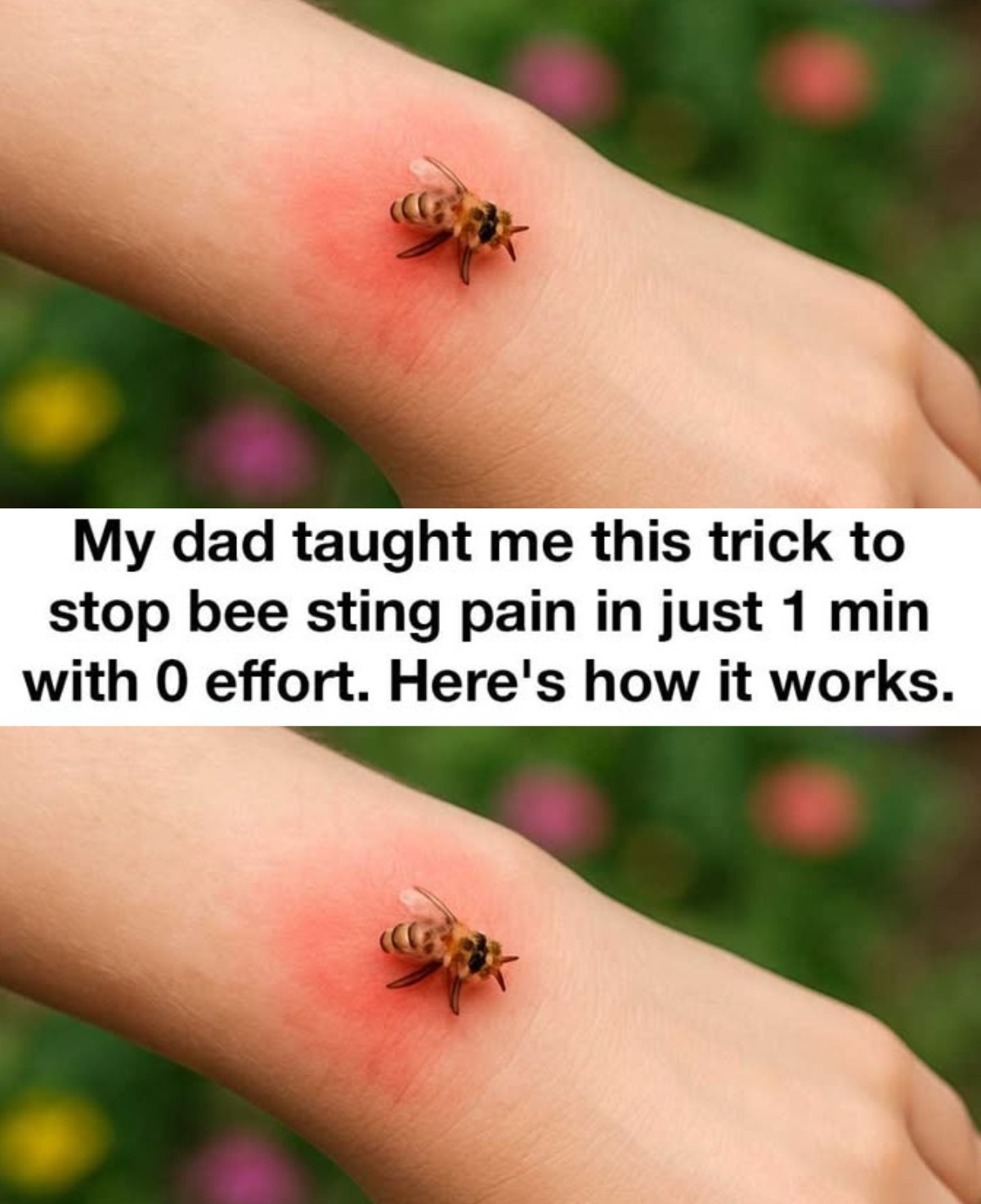
🐝 I Didn’t Know This — But My Dad’s 1-Minute Bee Sting Trick Works Like Magic
You’re enjoying a sunny afternoon in the garden.
The birds are singing.
The flowers are blooming.
And then — it happens.
A sharp, burning sting on your arm. You look down — a bee, now buzzing away. Within seconds, your skin is throbbing, red, and swelling.
Bee stings can be more than a minor annoyance. For many, they bring intense pain, itching, and swelling — and in some cases, can trigger dangerous allergic reactions.
Most people reach for ice packs, antihistamines, or home remedies like baking soda paste or vinegar. But what if there was a faster, simpler, and nearly effortless way to stop the pain — in just 60 seconds?
My dad taught me a family secret, passed down for generations — a one-minute trick that works so well, it feels like magic.
And today, I’m finally sharing it with you.
The 1-Minute Bee Sting Relief Trick (My Dad’s Secret)
It’s simple.
It’s natural.
And you probably have what you need in your kitchen right now.
🧊 Step 1: Press a Cold Spoon on the Sting
Yes — a regular spoon from your silverware drawer.
Here’s how:
Grab a stainless steel spoon.
Place it in the freezer for 1–2 minutes (or run it under very cold water).
Press the back of the spoon firmly over the sting.
Hold for 60 seconds.
That’s it.
Within moments, the burning pain fades.
The throbbing stops.
The swelling eases.
Why This Trick Works So Well
It’s not magic — it’s science and tradition combined.
❄️ 1. Cold Therapy Reduces Pain & Swelling
Cold constricts blood vessels, which:
Slows venom spread
Numbs nerve endings
Reduces inflammation
Metal spoons conduct cold better than ice, delivering deeper, faster relief.
🔁 2. Pressure Limits Venom Spread
Firm pressure helps keep bee venom from spreading into nearby tissue — a principle used in wilderness first aid.
🕰️ 3. Fast & Accessible
No mixing pastes, no pharmacy run. A spoon is always nearby — perfect for hikes, picnics, or backyard BBQs.
What NOT to Do After a Bee Sting
❌ Don’t scratch – It can spread venom and cause infection.
❌ Don’t use tweezers – This can squeeze more venom into the skin.
✅ Instead: Scrape the stinger out with a credit card or fingernail.
❌ Don’t apply heat – It increases swelling and pain.
❌ Don’t ignore allergy symptoms – Seek help immediately if you notice difficulty breathing, dizziness, or hives.
When to See a Doctor
Seek urgent medical care if you experience:
Difficulty breathing or swallowing
Swelling of face, lips, or throat
Dizziness, rapid heartbeat, or nausea
Multiple stings (especially in children or pets)
These could be signs of anaphylaxis — a life-threatening allergic reaction.
💉 If you’re allergic, always carry an epinephrine auto-injector (EpiPen).
Other Natural Bee Sting Remedies (That Actually Work)
see continuation on next page
