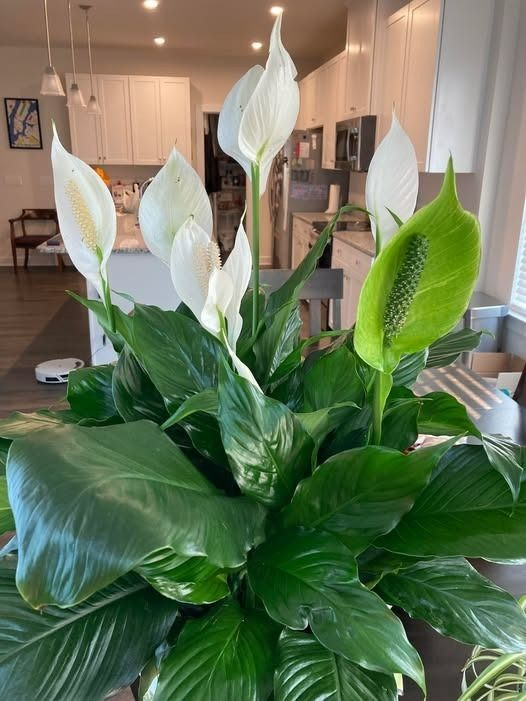
There’s something deeply satisfying about seeing your peace lily (Spathiphyllum) bloom.
That elegant white spathe (the flower-like hood) emerging from deep green foliage feels like a silent thank-you from your plant:
“You’re doing great. I’m happy here.”
Peace lilies are beloved for their lush leaves, air-purifying power, and graceful blooms — but if yours rarely flower, you’re not alone.
The Good News?
👉 With just a few simple care tweaks, you can encourage more frequent, longer-lasting blooms — year after year.
Let’s explore the real reasons peace lilies bloom (or don’t), and how to create the ideal environment for lush, white flowers to thrive.
🌸 Why Peace Lilies Stop Flowering
Peace lilies want to bloom — but only when conditions are just right.
Common reasons for few or no flowers:
❌ Not enough light (most common cause)
Make-Up & Cosmetics❌ Overwatering or poor drainage
❌ Lack of nutrients
❌ Too much or too little humidity
❌ Being root-bound for too long
✅ The good news? All of these are easily fixable.
✅ 6 Proven Tips to Get Your Peace Lily to Flower More
1. Give It Bright, Indirect Light
Peace lilies thrive in medium to bright indirect light
Too little light = lush leaves, no flowers
Flora & FaunaToo much direct sun = scorched leaves
✅ Best spot: Near an east-facing window, or a north-facing window with sheer curtains
✅ Sign of good lighting: Leaves are vibrant green, not dark or yellow
💡 Rotate the pot weekly for even growth.
2. Water Right – Not Too Much, Not Too Little
Peace lilies hate soggy soil, but wilt dramatically when thirsty.
Let the top 1–2 inches of soil dry out between waterings
Make-Up & CosmeticsAlways use a pot with drainage holes — never let it sit in standing water
✅ Pro tip: Water when the leaves droop slightly — they’ll perk up afterward. This is your plant’s natural signal!
3. Boost Humidity (They Love Moist Air)
Native to tropical rainforests, peace lilies thrive in high humidity (50–60%).
Low humidity leads to brown leaf tips and fewer blooms.
✅ Easy ways to increase humidity:
Place on a pebble tray with water
Group with other plants
Use a small humidifier
Mist the leaves occasionally (not a full substitute for humidity)
4. Feed It (But Don’t Overdo It)
Peace lilies benefit from light feeding to support flowering.
Use a balanced liquid houseplant fertilizer (e.g., 10-10-10 or 20-20-20)
GardeningFeed every 6–8 weeks during spring and summer
Stop feeding in fall and winter
✅ Tip: Dilute to half-strength — peace lilies are sensitive to salt buildup.
5. Keep It Warm (No Cold Drafts!)
5. Keep It Warm (No Cold Drafts!)
Ideal temperature range: 65–80°F (18–27°C)
Avoid cold windows, AC vents, or drafty doors
Cold stress = no flowering and possible leaf damage
✅ Tip: Keep your peace lily away from drafts, especially in winter.
6. Repot When Root-Bound (But Not Too Soon)
Peace lilies bloom best when slightly root-bound, but if:
Roots are growing out the bottom
The soil dries out quickly
…it’s time to upgrade the pot.
✅ When to repot: Every 2–3 years, preferably in spring
✅ Use: A well-draining potting mix (with perlite or orchid bark)
🌱 Bonus: How to Care for Your Peace Lily Between Blooms
Wipe leaves with a damp cloth
→ Removes dust and improves photosynthesisRemove spent flowers
→ Cut at the base to redirect energyTrim brown tips
→ Use clean scissors — never pullRotate the plant
→ Encourages even growth and exposure to light
🌼 What to Expect: Flowering Patterns
Peace lilies typically bloom in spring and summer
Each bloom lasts 4–6 weeks
With ideal care, some varieties bloom 2–3 times per year
The “flower” is actually a modified leaf (spathe) surrounding a spadix (the true flower part).
Blooms often start green, turn white, and then fade back to greenish-yellow as they age.
🌿 Final Thoughts
Getting your peace lily to flower isn’t about luck or a green thumb — it’s about meeting its basic needs with consistency and care.
Just focus on:
✅ The right light
✅ Proper watering
✅ A little humidity and nutrition
✅ Avoiding temperature extremes
And when that first white bloom appears?
You’ll know your plant feels safe, seen, and thriving.
