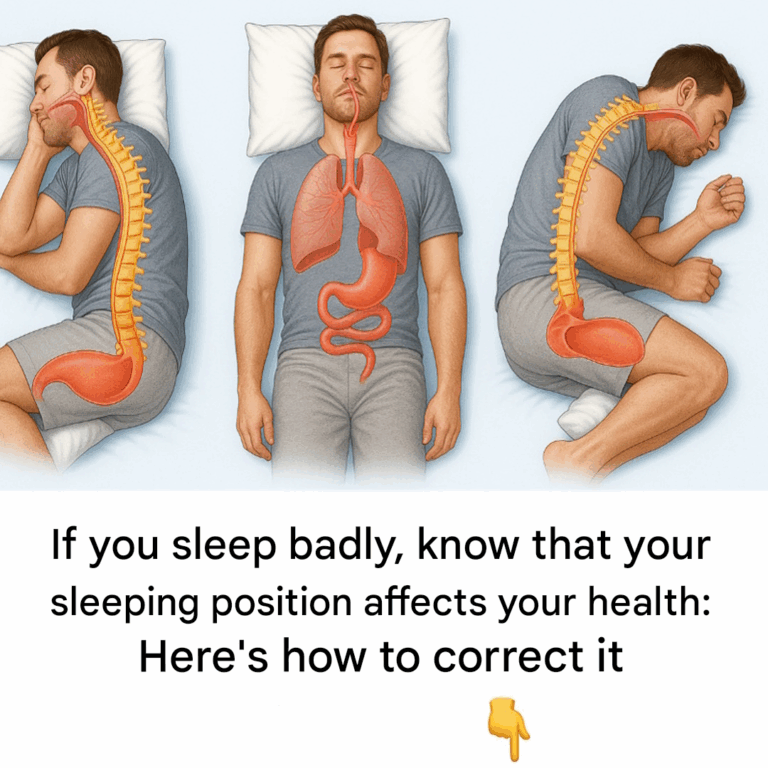
What if the key to deeper sleep and waking up refreshed was as simple as how you sleep?
Whether you lie on your back, side, or stomach, your sleeping position has a powerful impact on your health—often without you realizing it. The right posture at night can reduce pain, improve digestion and breathing, and help you feel more energized during the day.
The Signals Your Body Is Sending (and You Might Be Ignoring)
Loud snoring, morning headaches, acid reflux, a feeling of breathlessness, or persistent fatigue—even after a full night’s sleep—are often blamed on stress or a poor mattress. In reality, sleeping position is frequently the missing piece.
Sleep is not just rest; it’s when your body repairs tissues, balances hormones, and clears waste from the brain. Poor posture during sleep can interfere with these processes and, over time, lead to chronic issues.
The Benefits of Sleeping on Your Left Side
Sleeping on your left side isn’t just a wellness trend—it offers real physiological advantages:
Improved digestion
Reduced acid reflux
Better lymphatic drainage
Improved circulation during pregnancy, supporting blood flow to the fetus
Research also suggests that left-side sleeping may support the glymphatic system, the brain’s waste-removal network that helps clear toxins associated with neurological diseases.
What About Other Sleeping Positions?
On your back:
Excellent for spinal alignment, but not ideal for people who snore or have sleep apnea. This position can increase airway collapse and disrupt deep sleep.
On your stomach:
The least recommended position. It strains the neck, compresses internal organs, and restricts breathing, often leading to stiffness and fatigue upon waking.
On your right side:
Generally better than stomach sleeping, but it may worsen acid reflux and increase pressure on certain organs, including the liver.
Why Age Makes a Difference
see continuation on next page
Why Age Makes a Difference
Infants: Sleeping on the back is strongly recommended to reduce the risk of Sudden Infant Death Syndrome (SIDS).
Adults (especially over 60): The risk of sleep apnea increases with age, making back sleeping less suitable for many people.
Real-Life Experiences
Sophie, 36, struggled with postpartum acid reflux for months. Medication helped temporarily, but switching to left-side sleeping brought lasting relief.
Marc, 59, dealt with chronic fatigue caused by sleep apnea. Using a supportive pillow and adjusting his sleeping position significantly reduced nighttime breathing interruptions.
Common Myths About Sleeping Positions
“Sleeping on your back works for everyone.” — False. It depends on your health and anatomy.
“Sleeping on your stomach helps digestion.” — It actually makes it worse.
“Ergonomic pillows are just marketing.” — Proper support can greatly improve sleep quality.
“Snoring is harmless.” — It can indicate serious sleep disorders.
“You can catch up on sleep later.” — Sleep debt doesn’t work like a bank account.
Practical Tips for Better Sleep Tonight
Place a pillow between your knees to reduce lower-back strain
Slightly elevate your head to ease acid reflux
Use nasal strips or dilators if congestion affects breathing
Choose a mattress that supports natural spinal alignment
Start the night in your best sleeping position, even if you move later
Final Thought
Your well-being isn’t shaped only by what you do while awake—but also by how you sleep. Small adjustments to your sleeping position can lead to noticeable improvements in comfort, energy, and long-term health.
If you’d like, I can:
Shorten this for a blog or newsletter
Rewrite it in simpler language
Add scientific references
Turn it into a quick sleep-health checklist
